.svg)
OSB vs. Plywood: What’s the Difference (and Which Should You Choose?)
October 7, 2025
If you’ve ever walked through a lumber yard or home project site, you’ve likely seen both OSB (oriented strand board) and plywood used for walls, roofs, and floors. At first glance they look similar — large structural panels made from layers of wood — but they’re made in different ways and each has unique advantages.
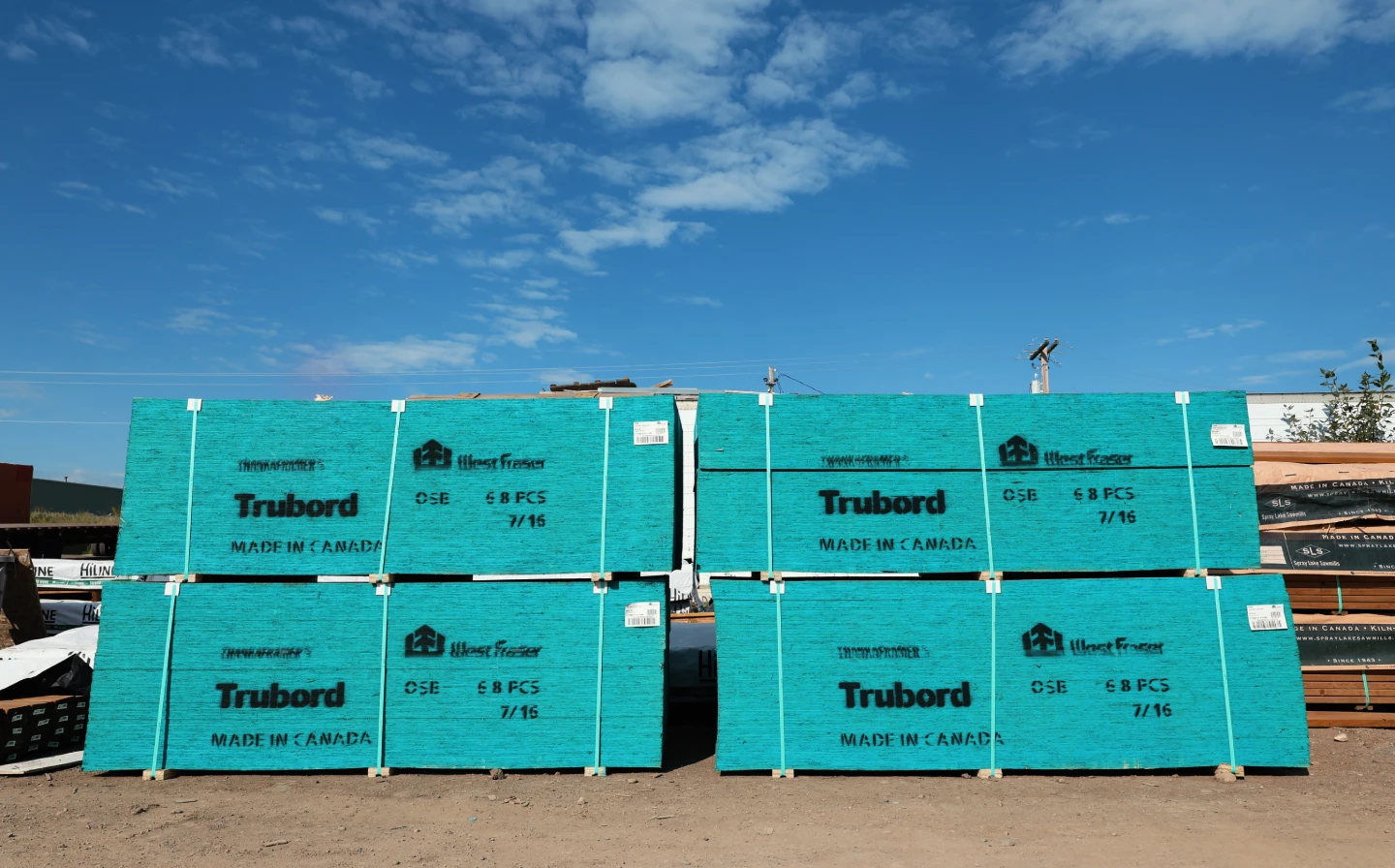
OSB is engineered by compressing layers of wood strands with adhesives under high heat and pressure. The result is a strong, consistent panel that’s cost-effective and ideal for sheathing, roofing, and sub floors. Because OSB uses smaller wood strands, it makes efficient use of forest resources and offers excellent strength for its price point.
Plywood, by contrast, is made by layering thin sheets (veneers) of wood with alternating grain directions, creating a panel with exceptional dimensional stability. It’s slightly lighter than OSB, more resistant to edge swelling when exposed to moisture, and often preferred for applications where the panel maybe exposed or finished.
So which is better? It depends on your project. For most structural applications like sheathing or roofing, OSB performs every bit as well as plywood. But for outdoor use or where edges may see moisture, plywood’s resistance and smoother finish can make it the better choice.
We Stock Both — Ready for Delivery
At EvansTedham Building Products, we carry a full range of OSB and plywood panels in multiple thicknesses and grades. Whether you need sheathing for a new home build or premium plywood for flooring, we have it in stock and ready to deliver.
Our team can package mixed loads — lumber, panels, fasteners, and more — and deliver directly to your site using our fleet out delivery vehicles, saving you valuable time on handling and coordination.
If you’re unsure which panel type is right for your build, our experienced team can help you choose the right product for strength,appearance, and cost efficiency.
.webp)